





By EntertainmentDhamaka
Thank you for reading this post, don't forget to subscribe!Sometimes the body gives us warnings that are easy to ignore.
A little pain in the toe. A swollen ankle. A joint that suddenly feels hot and painful.
Many people think it is just tiredness, an injury, or something that will disappear on its own. But in some cases, these symptoms can be connected to something happening silently inside the body — high uric acid.
Uric acid is a natural waste product produced when the body breaks down substances called purines. Normally, the kidneys filter uric acid from the blood and remove it through urine. But when the body produces too much uric acid or the kidneys cannot remove enough of it, the level can rise.
And sometimes, that buildup can become painful.
What Exactly Is Uric Acid?
Think of your bloodstream as a transportation system.
Uric acid is one of the waste products traveling through this system. Your kidneys act like filters, removing much of it from the blood so it can leave the body through urine.
But when there is too much uric acid or the kidneys are unable to remove enough, it can accumulate in the body.
Having high uric acid does not automatically mean that a person has gout. Many people with elevated uric acid never develop gout symptoms.
When Does Uric Acid Become a Problem?
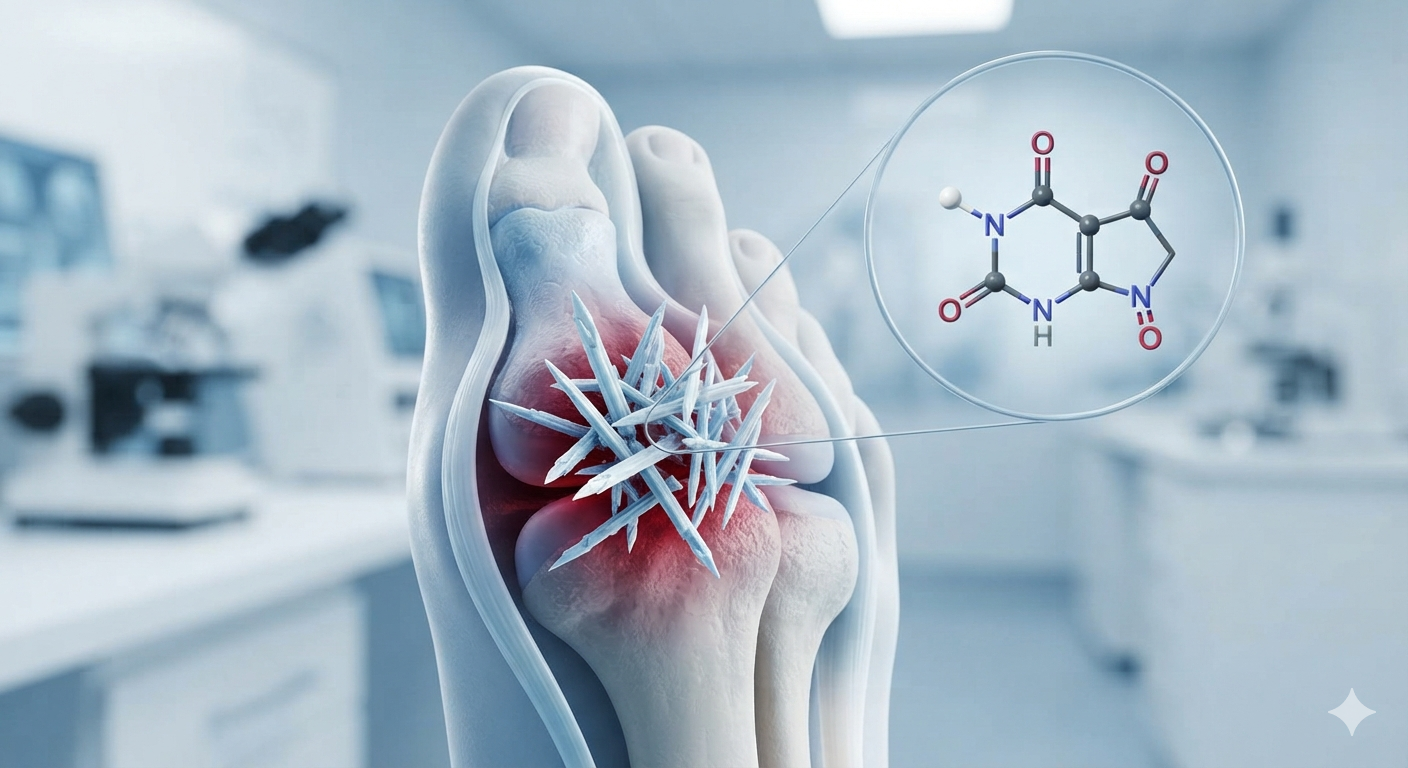
The problem can begin when excess uric acid forms tiny, needle-shaped crystals.
These crystals can collect in and around joints and trigger inflammation. This can lead to gout, a painful form of inflammatory arthritis.
A gout attack can appear suddenly, sometimes at night.
One moment everything seems normal. The next, a joint may become extremely painful, swollen, red and warm.
The big toe is a common location, although gout can also affect the ankle, knee and other joints.
Why Does Uric Acid Increase?
There isn’t always one single reason.
Several factors can contribute to higher uric acid levels, including:
- The body producing too much uric acid
- The kidneys removing too little
- Obesity or excess weight
- Kidney problems
- Alcohol consumption
- A diet high in certain purine-rich foods
- Some medicines
- Certain health conditions
- Genetic factors
This is why high uric acid shouldn’t simply be blamed on one particular food.
The Food Connection
Food can play a role, particularly foods and drinks associated with higher purine or fructose intake.
Red meat, organ meats such as liver, and certain seafood can contain substantial amounts of purines. Alcohol—especially beer—and sugar-sweetened drinks can also increase gout risk.
That doesn’t mean every person with high uric acid must completely eliminate every one of these foods. Dietary advice should take the individual’s health and medical situation into account.
What Should You Eat?
A healthy, balanced eating pattern can be part of managing gout and overall health.
Depending on your individual health needs, a diet can include:
- Vegetables
- Fruits
- Whole grains
- Appropriate low-fat dairy products
- Nuts and other nutritious foods
- Adequate fluids, unless a doctor has advised fluid restriction
For people with gout, health organizations recommend limiting alcohol, sugary drinks, red and organ meats, and certain seafood.
Water and Uric Acid
Your kidneys have an important role in removing uric acid from the body.
Staying adequately hydrated supports normal kidney function and urine production. However, people with certain kidney or heart conditions may need to follow specific fluid recommendations from their healthcare professional.
So, don’t force yourself to drink excessive amounts of water simply because you have heard that it will lower uric acid.
Does High Uric Acid Always Cause Symptoms?
No.
This is one of the most important things to understand.
A person can have high uric acid without experiencing joint pain or swelling. Some people never develop gout at all.
However, when uric acid crystals begin forming in joints, symptoms can become very noticeable.
Typical gout symptoms include:
- Sudden severe joint pain
- Swelling
- Redness
- Warmth around the joint
- Extreme tenderness
Gout attacks often affect one joint at a time and can last for days or even weeks.
Can High Uric Acid Affect the Kidneys?
Yes. Uric acid crystals can also contribute to kidney stones in some people.
That’s another reason persistent problems shouldn’t simply be ignored.
Can Lifestyle Changes Help?
Healthy lifestyle habits can help manage gout and may reduce the risk of future attacks.
Some useful steps include:
Maintain a Healthy Weight
If someone is overweight or has obesity, gradual weight loss can help reduce urate levels and may reduce gout flares.
Stay Physically Active
Regular physical activity is beneficial for overall health and is recommended as part of gout self-management.
Limit Alcohol
Alcohol, particularly beer and spirits, can increase gout risk. Limiting alcohol can therefore be an important part of management.
Reduce Sugary Drinks
Soft drinks and other beverages high in added sugars or fructose are worth limiting.
Follow Medical Advice
Lifestyle changes are important, but some people with gout need medication to control uric acid and prevent future attacks.
When Should You See a Doctor?
Don’t ignore a joint that suddenly becomes extremely painful, swollen, red or warm.
These symptoms can have several possible causes, and gout should be properly diagnosed rather than assumed.
A healthcare professional may use your symptoms, medical history, physical examination and laboratory or imaging tests to determine whether gout is responsible.
The Important Message
Uric acid isn’t something your body should have zero of. It is a normal waste product.
The problem occurs when the balance between production and removal is disrupted and uric acid levels become elevated.
For some people, this may remain silent. For others, it can eventually contribute to painful gout or kidney stones.
The best approach isn’t to panic over a single number on a blood report. Instead, understand what the result means, pay attention to symptoms, maintain healthy habits and speak with a healthcare professional when necessary.
Your body often whispers before it screams. Learning to recognize those early warnings can be an important step toward better health.