




By EntertainmentDhamaka
Thank you for reading this post, don't forget to subscribe!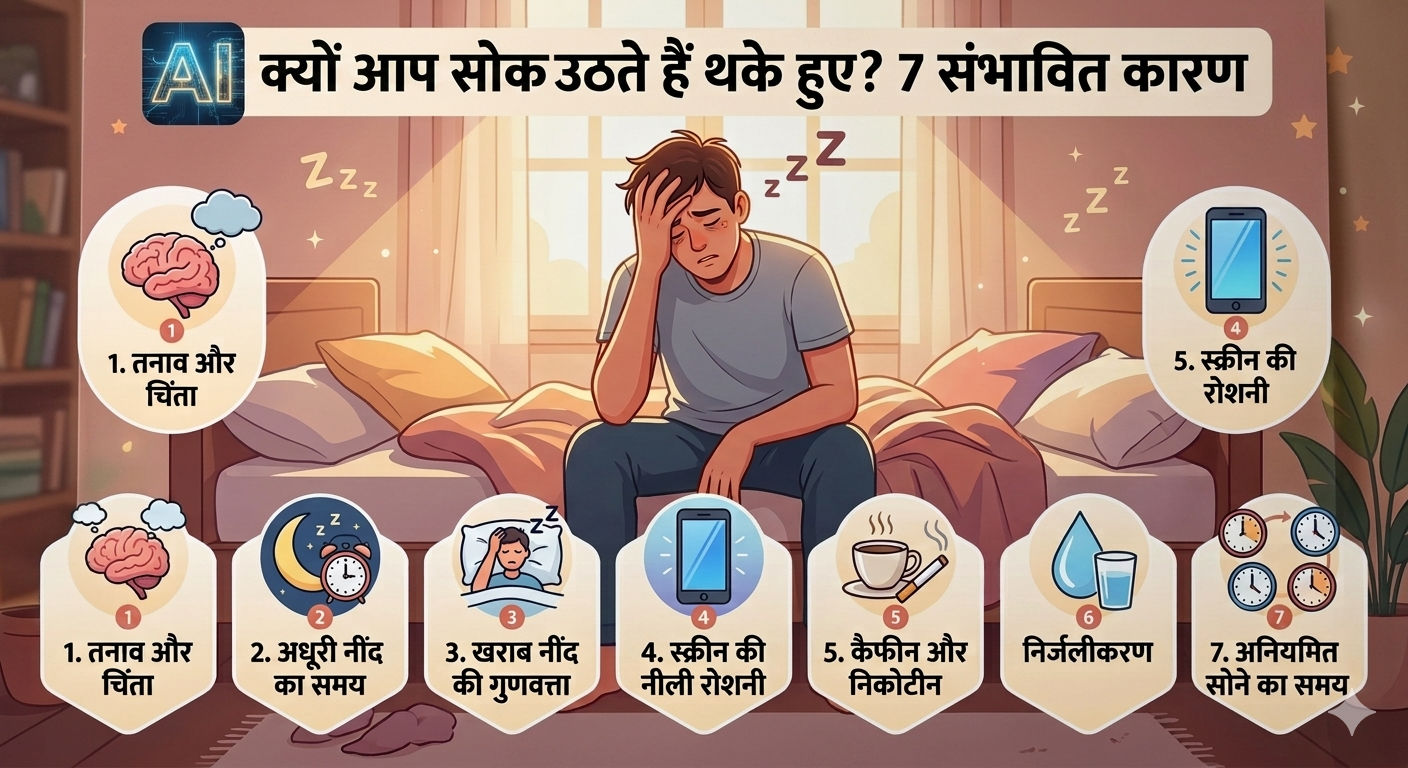
Have you ever slept for several hours, only to wake up feeling as if you barely rested at all?
You open your eyes, look at the clock and think, “I slept all night, so why am I still tired?”
Feeling tired after waking up can happen occasionally, especially after a stressful day or a poor night’s sleep. But if it happens regularly, your sleep quality, sleep schedule, lifestyle or an underlying health issue may be playing a role.
Let’s look at some common reasons why you may wake up tired—and what you can do about it.
1. You May Not Be Getting Enough Sleep
The first and most obvious reason is simply not getting enough sleep.
Most adults generally need at least 7 hours of sleep per night, although individual needs can vary. Regularly sleeping less than your body’s needs can lead to daytime tiredness and difficulty concentrating.
Staying up late watching videos, using social media or working can quietly reduce your total sleep time.
What can you do?
Try to maintain a consistent bedtime and wake-up time, including on weekends.
2. Your Sleep Quality May Be Poor
Sleeping for eight hours doesn’t necessarily mean you received eight hours of good-quality sleep.
You may wake up several times during the night without fully remembering it. Noise, light, an uncomfortable room temperature, stress or an irregular sleep schedule can interfere with your sleep.
As a result, you may wake up feeling exhausted even though you were technically in bed for many hours.
3. Your Phone Could Be Affecting Your Sleep
Scrolling through your phone just before bed has become a common habit.
Bright light from screens and stimulating content can make it harder for some people to relax before bedtime. Constant notifications can also interrupt sleep.
Try this simple experiment:
Put your phone away at least 30 minutes before bedtime and use that time to relax.
Reading a book, listening to calm music or simply preparing for the next day can create a more relaxing bedtime routine.
4. Stress Can Keep Your Brain Busy
Your body may be in bed, but your mind may still be working.
Worries about work, money, relationships, studies or tomorrow’s responsibilities can make it difficult to relax.
Stress can affect both how quickly you fall asleep and how well you sleep.
A simple bedtime habit
Before going to bed, write down the things you need to remember or deal with the next day.
This can help you avoid repeatedly thinking about them while trying to fall asleep.
5. Your Sleep Schedule May Be Irregular
Going to bed at 10 PM one night and 2 AM the next can confuse your body’s internal clock.
An inconsistent schedule may make it harder to fall asleep and wake up feeling refreshed.
Try keeping your bedtime and wake-up time relatively consistent.
6. Caffeine or Alcohol Could Be Playing a Role
Coffee, tea, energy drinks and other caffeinated beverages can affect sleep, especially when consumed later in the day.
Alcohol can make some people feel sleepy initially, but it can also interfere with normal sleep patterns later in the night.
If you regularly wake up tired, consider reviewing what you drink and when you drink it.
7. An Underlying Sleep or Health Problem Could Be Involved
Sometimes persistent tiredness isn’t simply a lifestyle issue.
Conditions such as sleep apnea, restless legs syndrome, insomnia and other health problems can interfere with sleep or cause daytime fatigue.
For example, people with sleep apnea may repeatedly stop and restart breathing during sleep. Loud snoring, gasping during sleep, morning headaches and significant daytime sleepiness can be warning signs.
If you regularly feel exhausted despite getting enough time in bed, it’s worth discussing the problem with a healthcare professional.
How to Wake Up Feeling More Rested
You don’t need a complicated routine to start improving your sleep.
Try these simple habits:
🌙 Keep a Regular Sleep Schedule
Go to bed and wake up at roughly the same time every day.
📱 Reduce Screen Time Before Bed
Give yourself some screen-free time before sleeping.
☕ Watch Your Caffeine Intake
Avoid consuming large amounts of caffeine late in the day.
🛏️ Make Your Bedroom Comfortable
Keep the room quiet, dark and comfortable.
🏃 Stay Physically Active
Regular physical activity can support better sleep, although intense exercise immediately before bedtime may not work well for everyone.
🍽️ Avoid Heavy Meals Close to Bedtime
Eating a very large meal shortly before sleeping may make some people uncomfortable.
🧘 Create a Relaxing Routine
Try reading, gentle stretching, breathing exercises or another calming activity before bed.
How Much Sleep Do You Need?
Sleep needs vary by age and individual circumstances. According to the CDC, adults generally need 7 or more hours of sleep per night, while teenagers and children typically require more.
Getting enough sleep is important because sleep supports several aspects of physical and mental health, including attention, mood and overall well-being.
When Should You Talk to a Doctor?
Occasionally waking up tired is normal.
However, consider speaking with a healthcare professional if:
- You feel extremely tired almost every day.
- You regularly wake up with headaches.
- You snore loudly or wake up gasping.
- Someone notices that your breathing stops during sleep.
- You have difficulty staying awake during the day.
- Your sleep problems continue despite improving your sleep habits.
Persistent daytime sleepiness shouldn’t simply be ignored.
Final Thoughts
Waking up tired doesn’t always mean you need to sleep for more hours.
Sometimes the real issue is sleep quality rather than sleep quantity.
A regular sleep schedule, less screen time before bed, a comfortable sleeping environment, regular physical activity and managing stress can all support healthier sleep habits.
And if you’re consistently exhausted despite getting enough time in bed, don’t ignore the signal. Your body may be telling you that it’s time to look more closely at your sleep and overall health.
Disclaimer: This article is for general educational purposes only and should not be considered medical advice. If you have persistent fatigue, severe daytime sleepiness, loud snoring or breathing problems during sleep, consult a qualified healthcare professional.