



Written by EntertainmentDhamaka
Thank you for reading this post, don't forget to subscribe!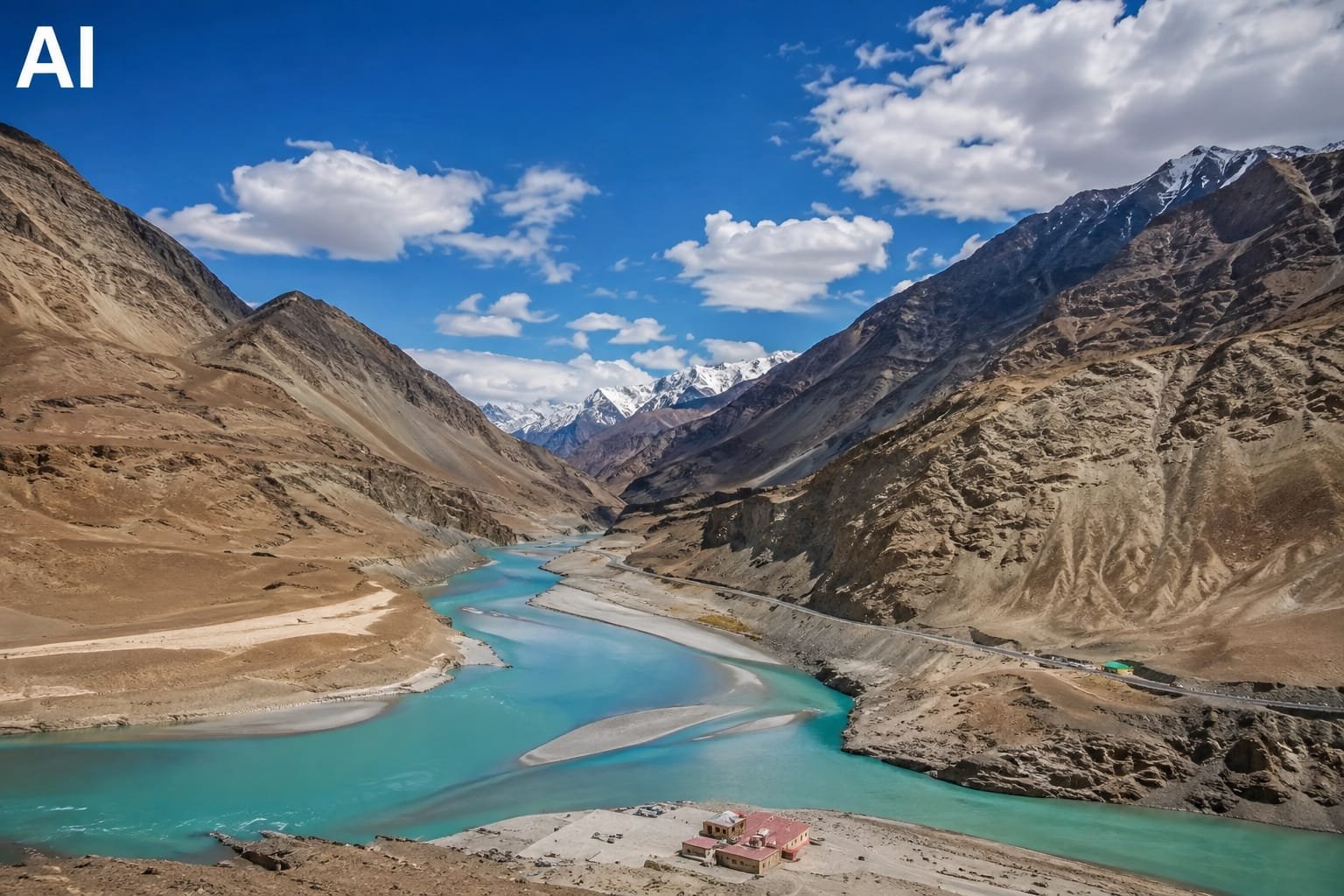
Imagine riding through a winding mounta
in road surrounded by enormous rocky peaks, crossing a high mountain pass, and suddenly discovering a deep-blue lake hidden among the Himalayas.
This is Ladakh—a land of dramatic landscapes, ancient monasteries, high-altitude lakes, winding roads, and unforgettable adventures.
Located in the Himalayan region of India, Ladakh is one of the country’s most unique travel destinations. Its landscape is very different from the green valleys and forests found in many other Himalayan destinations. Here, barren mountains, blue skies, colorful prayer flags, and ancient Buddhist monasteries create a fascinating combination.
Why Is Ladakh So Special?
Ladakh is often associated with the phrase “Land of High Passes.”
The region is known for its high-altitude landscapes, rugged mountains, deep valleys, and spectacular lakes.
One moment you may be driving through a dry mountain valley, and a few hours later you could find yourself standing beside a crystal-blue lake surrounded by massive mountains.
This dramatic contrast is one of the reasons Ladakh attracts travelers, photographers, bikers, and adventure lovers from around the world.
1. Leh – The Gateway to Ladakh
For most travelers, Leh is the starting point for exploring Ladakh.
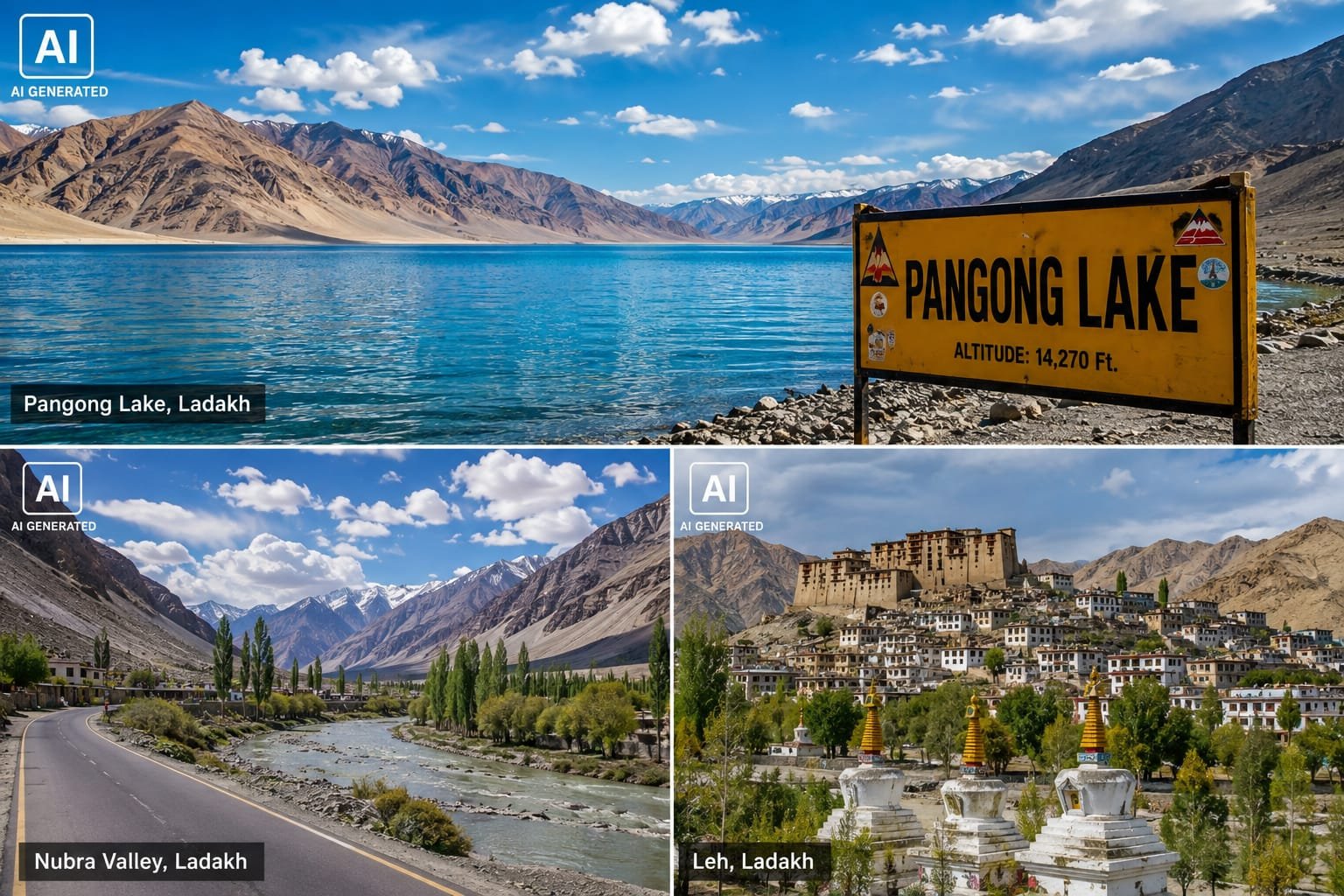
The town sits at a high altitude and is surrounded by mountains. Leh offers a combination of Tibetan-Buddhist culture, local markets, monasteries, restaurants, and spectacular mountain views.
Some popular places around Leh include:
- Leh Palace
- Shanti Stupa
- Leh Market
- Thiksey Monastery
- Shey Palace
Leh is also an important place to spend time acclimatizing before traveling to higher-altitude destinations.
2. Pangong Lake – The Blue Jewel of Ladakh
Few places in Ladakh are as famous as Pangong Lake.
The lake became widely known among Indian travelers after appearing in popular films, but its natural beauty is what makes it truly special.
Surrounded by barren mountains, the lake stretches across the high-altitude landscape and can display striking shades of blue.
The contrast between the deep-blue water, brown mountains, and clear sky creates an extraordinary scene.
For photographers, Pangong Lake can be one of the highlights of a Ladakh journey.
3. Nubra Valley – A Different Side of Ladakh
Nubra Valley offers another fascinating experience.
The valley is surrounded by rugged Himalayan mountains and is known for its dramatic landscapes, villages, monasteries, and unique high-altitude environment.
One of the best-known attractions is the area around Hunder, where visitors can see sand dunes against a Himalayan backdrop.
The sight of desert-like sand dunes surrounded by enormous mountains makes Nubra very different from many other places in India.
4. Khardung La – A Famous Mountain Pass
Khardung La is one of the well-known mountain passes associated with Ladakh.
For many motorcycle travelers, reaching the high mountain roads around this region is an important part of the Ladakh experience.
The road offers spectacular views of the surrounding mountains and valleys.
However, high-altitude travel can be physically demanding. Travelers should follow local guidance and take altitude and weather conditions seriously.
5. Magnetic Hill – A Curious Roadside Attraction
One of the unusual attractions near Leh is Magnetic Hill.
The location is famous for an optical illusion that can make vehicles appear to move uphill when placed in a particular position.
Although the phenomenon is often described using stories about magnetic forces, the apparent movement is generally explained as an optical illusion caused by the surrounding landscape and slope.
It remains a fun stop for travelers exploring the region by road.
6. Monasteries of Ladakh
Ladakh is not only about mountains and lakes. Its monasteries are an important part of the region’s culture and heritage.
Some well-known monasteries include:
Thiksey Monastery
Located near Leh, Thiksey Monastery is one of Ladakh’s most recognizable monasteries. Its architecture and hilltop location make it particularly impressive.
Hemis Monastery
Hemis is one of the region’s important Buddhist monasteries and is known for its annual festival.
Diskit Monastery
Located in Nubra Valley, Diskit Monastery is famous for its impressive location and large statue of Maitreya Buddha overlooking the valley.
These monasteries provide travelers with an opportunity to learn more about Ladakh’s Buddhist traditions and cultural heritage.
7. Ladakh for Motorcycle Lovers
Ladakh has become one of India’s most popular destinations for motorcycle road trips.
Long winding roads, mountain passes, remote valleys, and dramatic landscapes create an experience that is very different from an ordinary road journey.
Popular routes may include journeys connecting Leh, Nubra Valley, Pangong Lake, and other mountain destinations.
However, high-altitude motorcycle travel requires preparation. Riders should check road conditions, weather, permits where applicable, vehicle requirements, and local travel advisories before starting a journey.
8. The Unique Landscape of Ladakh
Perhaps the most fascinating thing about Ladakh is its landscape.
Unlike many other Himalayan destinations, large parts of Ladakh are dry and rocky.
The region features:
- Huge mountain ranges
- Deep valleys
- High-altitude lakes
- Rocky deserts
- Snow-covered peaks
- Clear blue skies
- Ancient monasteries
- Winding mountain roads
The combination creates a landscape that almost feels otherworldly.
9. Best Time to Visit Ladakh
The ideal time to visit Ladakh depends on your travel plans and the specific areas you want to explore.
The warmer months are generally the main travel season for many routes because winter can bring severe cold, snow, and difficult road conditions.
If you are planning a trip, always check the latest information about:
- Weather
- Road conditions
- Permits
- Local restrictions
- Accommodation
- Altitude-related travel advice
Conditions can change quickly in mountainous regions.
10. Important Ladakh Travel Tips
Take Acclimatization Seriously
Ladakh is located at high altitude. Visitors arriving from lower elevations may need time to acclimatize.
Do not rush into strenuous activities immediately after arrival.
Stay Hydrated
Drink sufficient fluids and listen to your body, especially while adjusting to the altitude.
Carry Suitable Clothing
Mountain temperatures can change significantly between day and night. Warm layers are useful even during the main travel season.
Respect Local Culture
Ladakh has a rich Buddhist cultural heritage. Dress respectfully when visiting monasteries and follow local rules.
Protect the Environment
Ladakh’s ecosystem is fragile. Avoid littering, carry waste responsibly, and respect local wildlife and natural areas.
Why Should You Visit Ladakh?
Ladakh is not simply another mountain destination.
It is an experience.
You can watch the sunrise over a Himalayan valley, explore an ancient monastery, ride along winding mountain roads, stand beside a deep-blue lake, and experience a culture that has developed in one of the world’s most challenging environments.
For adventure lovers, photographers, nature enthusiasts, and road-trip travelers, Ladakh offers countless unforgettable moments.
Final Thoughts
Ladakh is a destination where mountains meet culture, adventure meets silence, and barren landscapes create extraordinary beauty.
From the streets of Leh and the ancient monasteries to Pangong Lake and the remote valleys of Nubra, every part of the region has something different to discover.
If you are looking for a travel experience that feels completely different from an ordinary holiday, Ladakh deserves a place on your travel bucket list.
Travel Disclaimer
Travel conditions, weather, road accessibility, permits, altitude requirements, and local regulations can change. Always check current official information and local advisories before traveling to Ladakh.