



Written by EntertainmentDhamaka
Thank you for reading this post, don't forget to subscribe!Piles, medically known as hemorrhoids, are a common health condition that affects many people. They occur when the blood vessels in and around the anus or lower rectum become swollen or enlarged.
Although piles are usually not dangerous, they can cause discomfort, itching, pain, and bleeding during bowel movements. Understanding the causes, symptoms, prevention, and available treatment options can help people manage the condition properly.
What Are Piles?
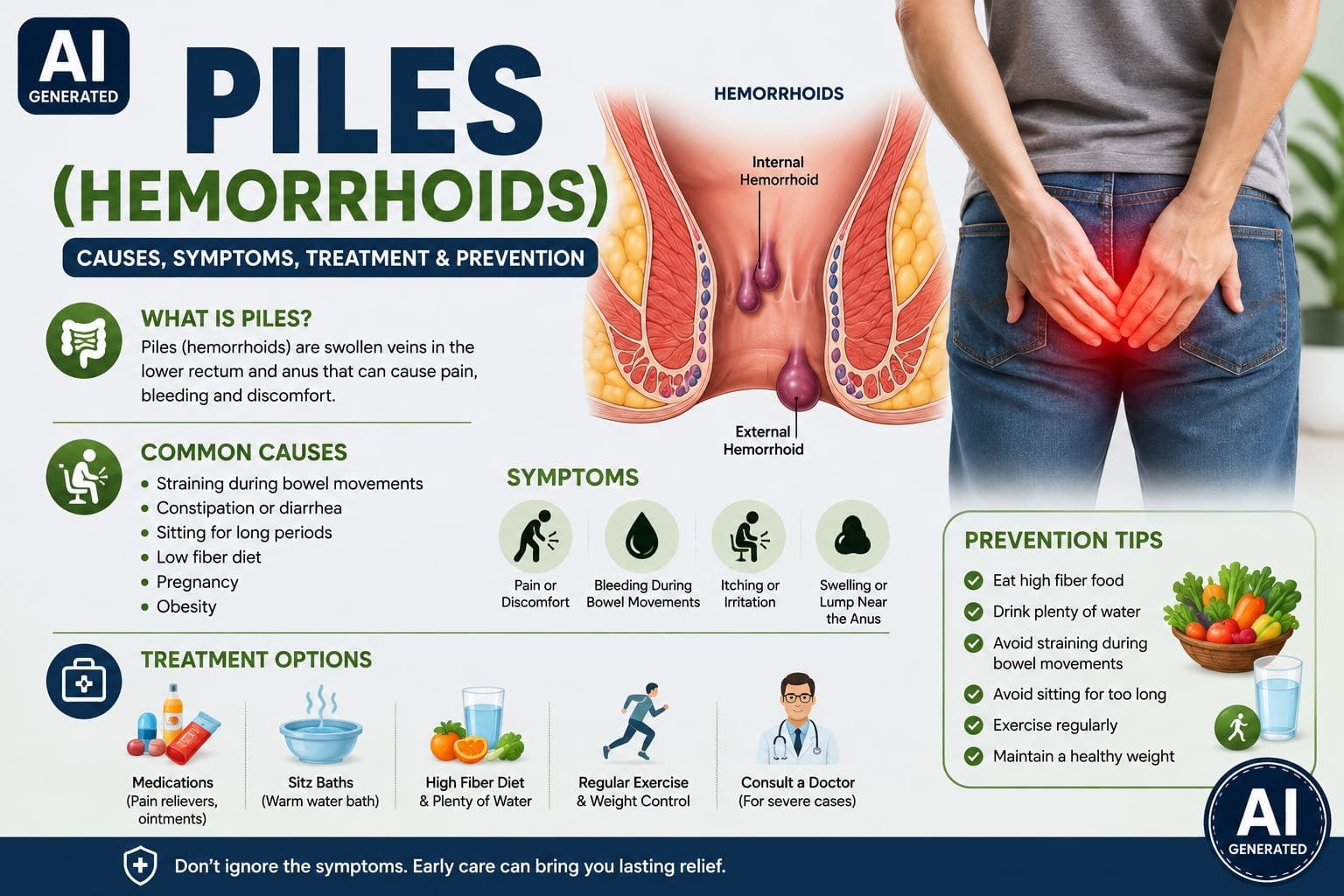
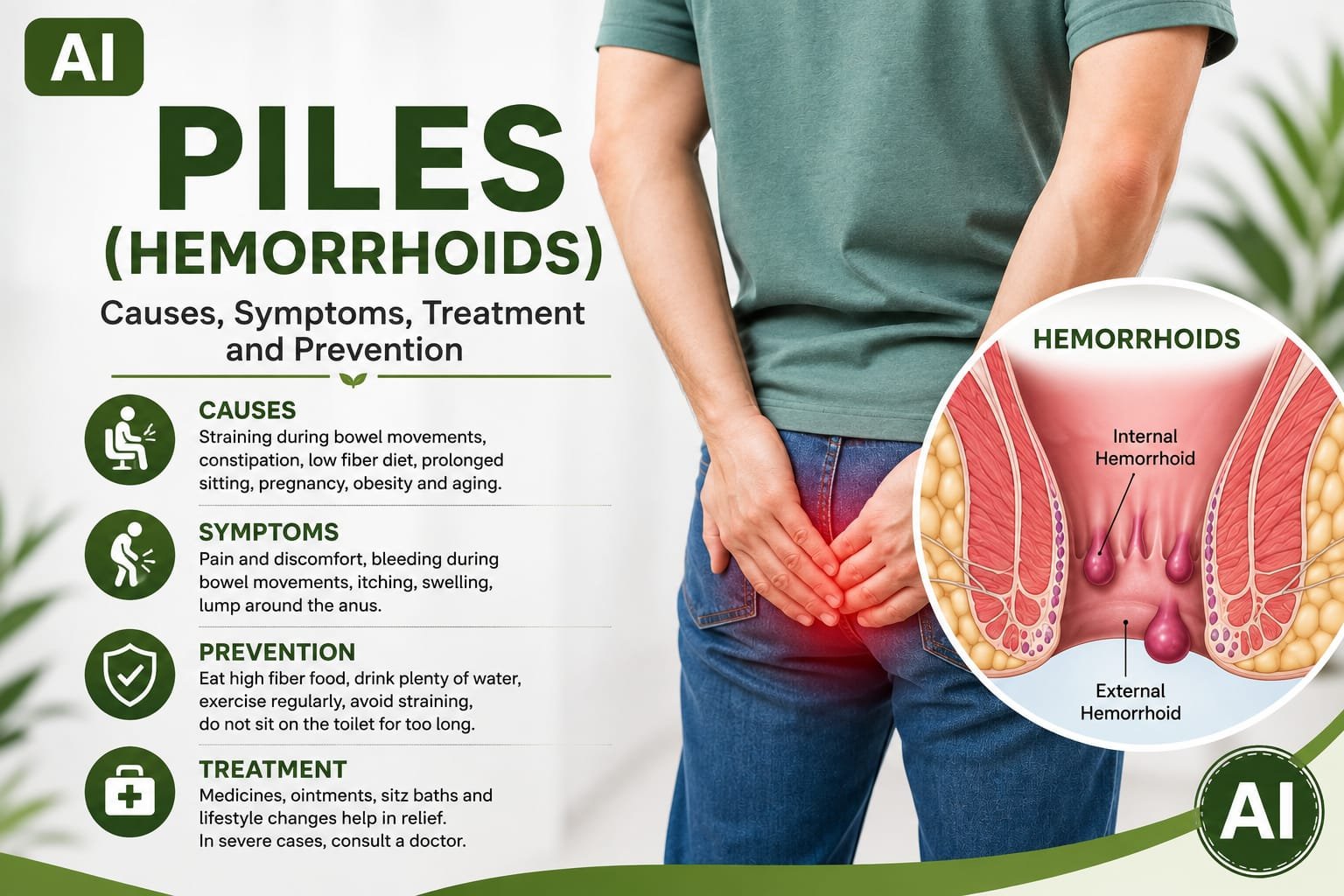
Piles, or hemorrhoids, are swollen veins in the lower rectum or around the anus. They are generally classified into two types:
- Internal Hemorrhoids: These develop inside the rectum.
- External Hemorrhoids: These develop under the skin around the anus.
Some people may have mild hemorrhoids without experiencing noticeable symptoms.
Common Symptoms of Piles
The symptoms can vary depending on the type and severity of hemorrhoids. Common symptoms include:
- Bright-red blood during or after a bowel movement
- Itching or irritation around the anus
- Pain or discomfort, especially with external hemorrhoids
- Swelling around the anus
- A lump or swelling near the anus
- Discomfort while sitting
- Difficulty or discomfort during bowel movements
If rectal bleeding occurs repeatedly, it should not automatically be assumed to be caused by piles.
What Causes Piles?
Several factors can increase the risk of developing hemorrhoids. Common causes and contributing factors include:
1. Constipation
Hard stools and difficulty passing stools can put extra pressure on the veins around the anus.
2. Straining During Bowel Movements
Repeatedly pushing or straining during bowel movements can increase pressure on the blood vessels.
3. Low-Fiber Diet
A diet lacking enough fiber can contribute to constipation, which may increase the risk of hemorrhoids.
4. Long Periods of Sitting
Sitting for long periods, particularly on the toilet, may increase pressure around the rectal area.
5. Pregnancy
Hormonal changes and increased pressure in the pelvic area during pregnancy can increase the likelihood of developing hemorrhoids.
How Can You Help Prevent Piles?
Healthy daily habits can help reduce the risk of hemorrhoids and constipation.
Eat More Fiber
Include fruits, vegetables, whole grains, beans, and other fiber-rich foods in your diet.
Drink Enough Water
Staying properly hydrated can help keep stools softer and easier to pass.
Avoid Excessive Straining
Try not to push or strain excessively during bowel movements.
Stay Physically Active
Regular walking and physical activity can support healthy bowel movements and overall digestive health.
Don’t Ignore the Urge to Use the Toilet
Delaying bowel movements regularly can contribute to harder stools and constipation.
How Are Piles Treated?
Treatment depends on the severity of the condition. Mild symptoms may improve with lifestyle changes, such as increasing dietary fiber, drinking enough fluids, avoiding straining, and maintaining regular physical activity.
Doctors may also recommend medicines or other treatments when necessary. More persistent or severe hemorrhoids may require medical procedures.
It is important to speak with a healthcare professional before starting any medication or treatment.
When Should You See a Doctor?
You should consider consulting a healthcare professional if:
- Rectal bleeding keeps happening
- You experience significant or worsening pain
- A lump around the anus becomes very painful
- Symptoms do not improve with basic self-care
- You are unsure whether your symptoms are actually caused by hemorrhoids
Rectal bleeding should not always be assumed to be piles, as other medical conditions can also cause bleeding.
Final Thoughts
Piles are a common condition that can cause pain, itching, swelling, and bleeding. Maintaining a fiber-rich diet, drinking enough water, staying active, and avoiding excessive straining can help support healthy bowel movements.
If symptoms continue, become severe, or include repeated bleeding, getting medical advice is the safest approach.
Medical Disclaimer
This article is intended for general informational purposes only. It is not a substitute for professional medical advice, diagnosis, or treatment. If you have persistent, severe, or concerning symptoms, consult a qualified healthcare professional.