




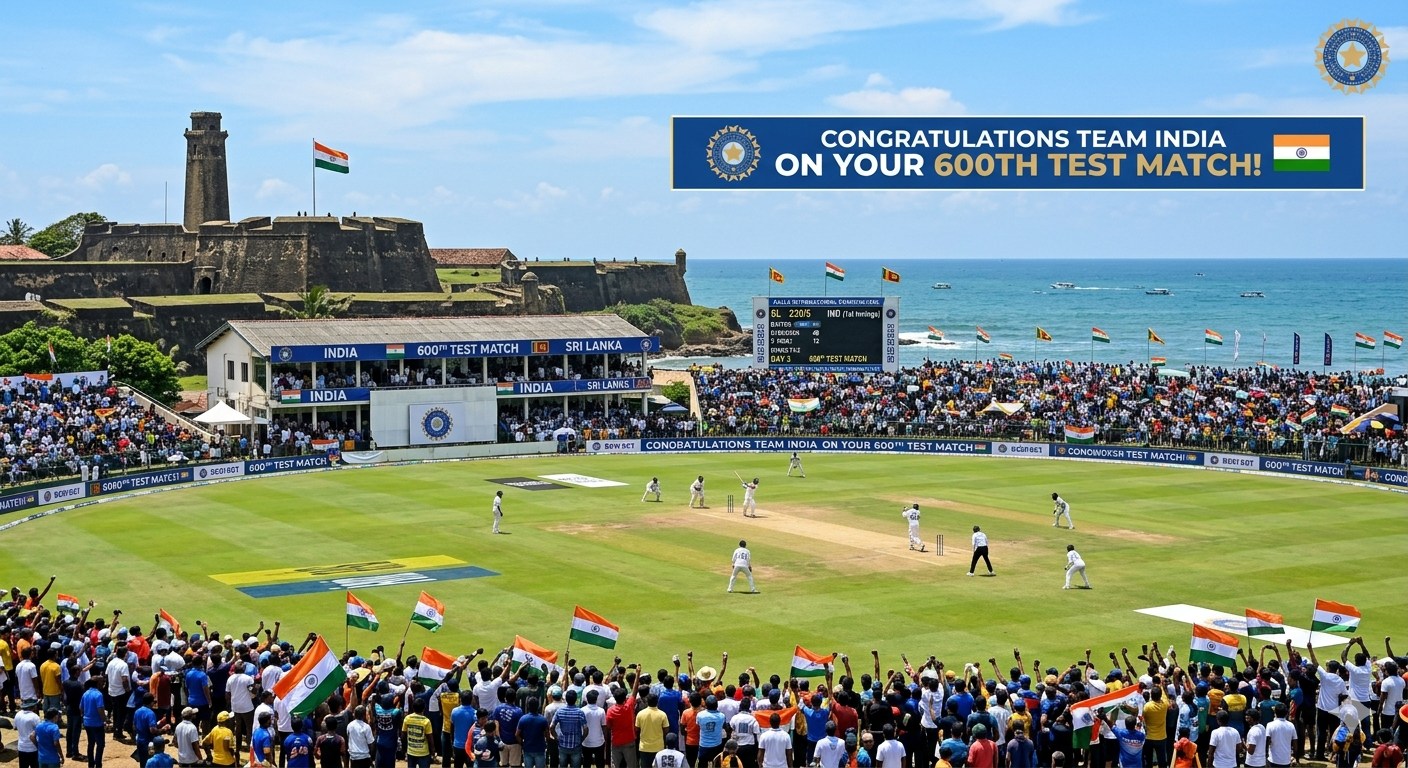
600 Tests. 94 years. Hundreds of players. Millions of fans. One incredible journey.
Thank you for reading this post, don't forget to subscribe!Indian cricket has reached a milestone that deserves to be remembered.
On August 15, 2026, India stepped onto the field in Galle, Sri Lanka, for its 600th Test match. The occasion became even more special because it happened on India’s Independence Day.
For cricket fans, this isn’t simply another match between India and Sri Lanka. It is a celebration of almost a century of Indian Test cricket.
From the days of CK Nayudu to the modern era of Shubman Gill, India’s journey has been filled with legendary players, unforgettable performances and moments that have become part of cricket history.
The Beginning
India’s Test story began in 1932.
India played its first Test against England at the famous Lord’s Cricket Ground in London, with CK Nayudu leading the side.
At that time, Indian cricket was still finding its place on the international stage.
Nobody could have imagined that the team making its Test debut would eventually play 600 matches and become one of the strongest teams in world cricket.
That first match was the beginning of a journey that has now lasted almost 94 years.
A Huge Milestone
India’s 600th Test puts the country in a very exclusive group.
Before India, only England and Australia had reached 600 men’s Test matches.
That means India is now only the third team in Test history to achieve this milestone.
The number 600 may look like just another statistic, but behind it are thousands of days of cricket, hundreds of players and countless memorable moments.
Why August 15?
The timing of India’s 600th Test makes the occasion even more special.
The match began on August 15, India’s Independence Day.
It is rare for such an important cricket milestone to coincide with a date that carries such significance for the country.
Before the match, members of the Indian team marked Independence Day in Galle with the hoisting of the Indian Tricolour.
For the players and fans, the combination of national pride and cricket history created an emotional atmosphere around the match.
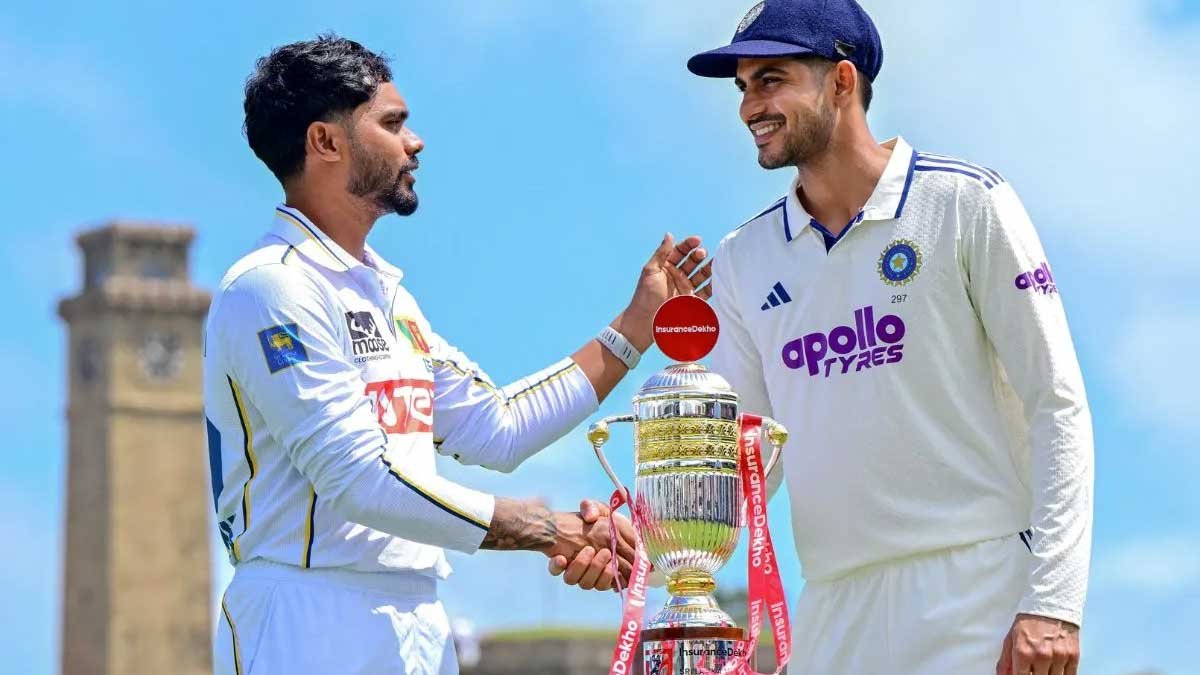
Gill’s Big Moment
The 600th Test is also a major moment for Shubman Gill.
Gill is leading India in this historic match.
India won the toss and chose to bat first, putting the responsibility on the Indian batting lineup to give the team a strong start.
Leading a team is always a challenge.
But leading India in its 600th Test, on Independence Day, adds another level of pressure and importance.
For Gill, this match will always remain one of the most memorable moments of his captaincy.
The Rain Twist
The opening day didn’t go completely according to plan.
Rain interrupted the action in Galle, adding another twist to India’s historic match.
After an early wicket, KL Rahul and Devdutt Padikkal helped India rebuild the innings.
Their partnership gave India stability before rain once again affected the day’s play.
That’s one of the interesting things about Test cricket.
Even when a team reaches a major milestone, the match itself doesn’t stop being unpredictable.
Weather, pitch conditions and small moments can completely change the direction of a five-day game.
The Legends
India’s 600-Test journey is really a story about generations of players.
Think of the names that have worn the Indian Test jersey.
Sunil Gavaskar became one of India’s greatest opening batsmen.
Kapil Dev showed that India could produce world-class fast-bowling all-rounders.
Anil Kumble became one of India’s greatest wicket-takers.
Then came Sachin Tendulkar, whose career became a huge part of Indian cricket’s identity.
Rahul Dravid represented patience and technique.
Later, Virat Kohli helped create an aggressive and fitness-focused Indian Test team.
Now a new generation led by Shubman Gill is taking the story forward.
Every generation has added something to India’s Test history.
From 1 to 600
India’s major Test milestones show just how long this journey has been.
1932: India’s first Test.
1967: India’s 100th Test.
1982: India’s 200th Test.
1996: India’s 300th Test.
2006: India’s 400th Test.
2016: India’s 500th Test.
2026: India’s 600th Test.
There is something fascinating about those numbers.
The gap between India’s first Test and its 600th is almost a century.
During that period, cricket changed dramatically.
But India’s Test journey continued through every era.
Galle’s Own Record
India isn’t the only one reaching a milestone during this match.
The Galle International Stadium has also reached an important landmark.
The venue is hosting its 50th men’s Test match.
So the historic occasion has two impressive numbers attached to it:
India – 600 Tests
Galle – 50 men’s Tests
That makes the venue an even more interesting part of the story.
A Different Kind of Cricket
Test cricket is very different from T20 cricket.
There is no rush to finish the match in a few hours.
Players have to think about sessions, days and sometimes even the condition of the pitch several days later.
A batsman may spend hours trying to build an innings.
A bowler may have to keep attacking the same batsman for an extended period.
Captains have to think several steps ahead.
That’s why reaching 600 Tests is such a significant achievement.
It represents decades of commitment to the longest format of the game.
India’s Spin Attack
Playing in Galle can be a challenge for visiting teams.
As a Test progresses, spin can become increasingly important.
India has selected a strong spin attack for the occasion, with Ravindra Jadeja, Kuldeep Yadav and Manav Suthar included in the playing XI.
Fast bowlers Mohammed Siraj and Prasidh Krishna also give India variety in its attack.
Sri Lanka, meanwhile, will hope its home conditions can help it challenge India.
The historic occasion may belong to India, but Sri Lanka will be determined to make the match difficult.
More Than a Number
What does 600 Tests actually mean?
It means 600 matches.
But it also means thousands of individual cricket stories.
A young player making a Test debut.
A batsman scoring his first century.
A bowler taking five wickets.
A captain leading a comeback.
A last-minute victory.
A heartbreaking defeat.
A player saying goodbye to international cricket.
Every Test adds another story to the history of Indian cricket.
That’s why the number 600 carries so much meaning.
Cricket Has Changed
The way people watch cricket has changed almost completely since India’s first Test.
In the early years, fans depended heavily on newspapers and radio commentary.
Television later transformed the experience.
Today, fans can watch matches live on phones, computers and televisions while checking scores instantly.
Technology has changed almost everything around cricket.
Yet the basic attraction remains the same.
A bat.
A ball.
Two teams.
And the pressure of Test cricket.
The Next Generation
The 600th Test isn’t just about looking backward.
It is also about looking ahead.
Players like Shubman Gill and other young cricketers will now carry India’s Test legacy into the future.
The legends of previous generations have set the standard.
The next generation has to create its own memories.
One day, another Indian captain will walk onto the field for India’s 700th Test.
When that happens, fans will probably look back at the 600th Test in Galle as another important chapter.
A Special Independence Day
There couldn’t be a more symbolic date for Indian cricket to reach such a milestone.
August 15, 2026.
India’s Independence Day.
India’s 600th Test.
The Indian flag flying in Galle.
A new generation leading the team.
And almost a century of cricket history behind them.
The match result will eventually become another line in the record books.
But the date and the occasion will remain special.
Final Thoughts
India’s journey from its first Test at Lord’s in 1932 to its 600th Test in 2026 is one of the most remarkable stories in international cricket.
The journey has included legendary batsmen, world-class bowlers, brilliant captains, unforgettable victories and millions of passionate supporters.
From CK Nayudu to Shubman Gill, Indian cricket has passed through many generations.
The players changed.
The technology changed.
The game changed.
But India’s love for Test cricket remained.
And now, on Independence Day, another chapter has been added.
600 Tests. 94 years. Countless memories. One incredible journey.
India’s Test story isn’t finished.
In fact, the next chapter has only just begun.
Written by Entertainment Dhamaka
This article is an original editorial feature based on cricket information available on August 15, 2026.