


Harry Potter is returning to Hogwarts — but this time, the journey is being told as a television series.
Thank you for reading this post, don't forget to subscribe!HBO’s new adaptation of Harry Potter and the Philosopher’s Stone is one of the most closely watched fantasy projects of 2026. Unlike the original film franchise, this production is being developed as a television adaptation of J.K. Rowling’s books, giving the creative team an opportunity to revisit the story with a new cast and more room for the source material.
The first official teaser was released by HBO in March 2026, while a second trailer followed in September, giving viewers a closer look at the new interpretation of Hogwarts and several familiar moments from the first book. The first season has been announced as an eight-episode adaptation and is scheduled to premiere at Christmas 2026.
For fans who already know the story, the interesting question is not simply, “What happens in Harry Potter?”
We already know that.
The more important question is: What can this television adaptation add to a story audiences have already seen on screen?
🎬 Watch the Official Harry Potter Teaser
https://www.youtube.com/watch?v=SJVmeJaS44s&t=2s
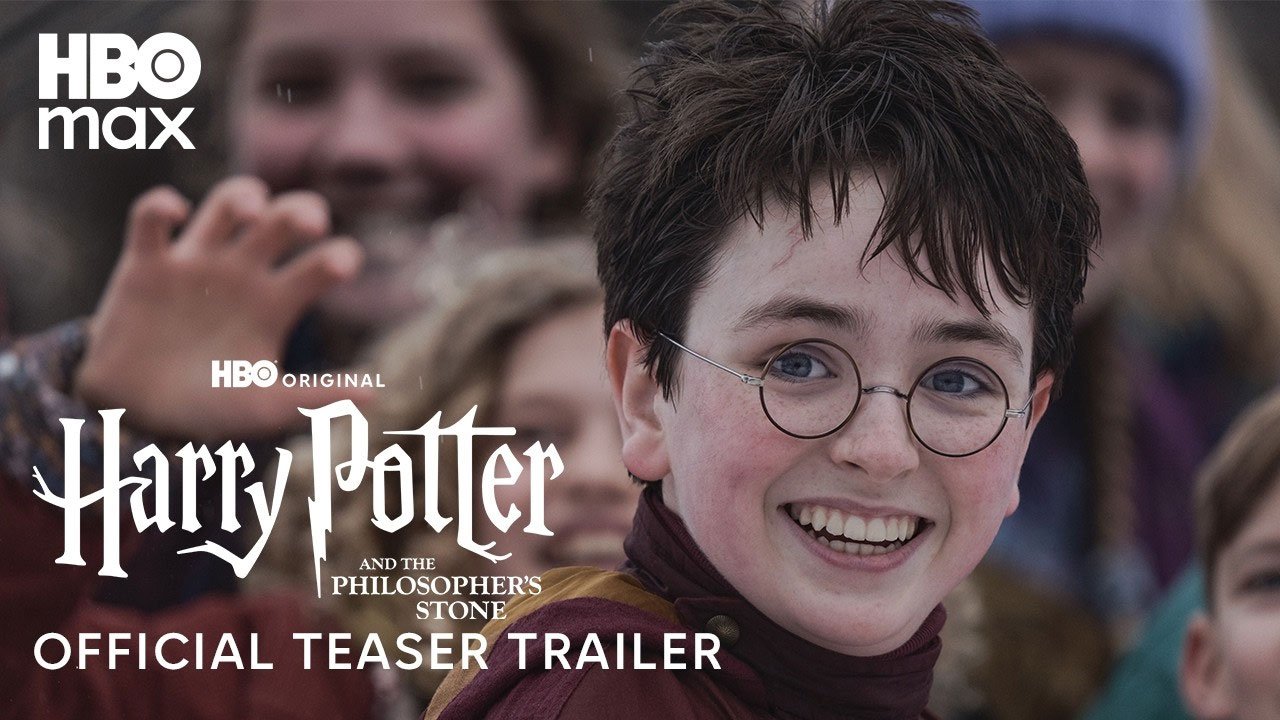
The official teaser was released by HBO Max and introduces the new era of Hogwarts.
Watch the Official Harry Potter and the Philosopher’s Stone Teaser on YouTube
HBO’s official announcement confirms that the first season is titled Harry Potter and the Philosopher’s Stone, will consist of eight episodes and is scheduled to debut at Christmas 2026.
What the New Trailer Actually Tells Us
The most useful way to look at the trailer is to separate confirmed information from fan speculation.
The footage introduces the new versions of Harry Potter, Ron Weasley and Hermione Granger and gives audiences a visual look at the world they will inhabit.
The trailer also points toward several recognizable elements from the first story, including Harry’s introduction to the wizarding world, Hogwarts and some of the experiences that define his first year.
Reports on the trailer note glimpses of important moments such as Harry meeting Hagrid, the Sorting Hat and his first Quidditch experience.
That is significant because these moments are not random fan-service scenes. They represent the stages through which Harry changes from an isolated eleven-year-old into someone who begins to understand friendship, loyalty and responsibility.
The trailer therefore works best when viewed as an introduction to the structure of Harry’s first year, rather than simply a collection of nostalgic images.
The Biggest Change: A New Harry Potter
The most obvious difference is the cast.
Dominic McLaughlin plays Harry Potter, Arabella Stanton plays Hermione Granger and Alastair Stout plays Ron Weasley.
This creates an unusual situation for the new production.
The characters are fictional, but the previous actors became so closely associated with them that audiences naturally connect Harry with Daniel Radcliffe, Hermione with Emma Watson and Ron with Rupert Grint.
The new actors therefore should not be judged simply by asking whether they “look like” the previous cast.
A more useful question is whether they capture the personalities described in the books.
That distinction matters.
The HBO production is not trying to erase the previous movies. It is creating another screen interpretation of the original literary material.
Why the Eight-Episode Format Could Change the Story
The first season is officially planned as eight episodes.
This is perhaps the most important structural difference between the new series and the earlier movie adaptation.
A television season gives the creators more opportunities to divide the story into smaller narrative sections.
That can be useful for Harry Potter because the first book contains many details that contribute to the characters’ relationships and the gradual discovery of Hogwarts.
In a feature film, every scene has to compete for limited screen time.
In an eight-episode season, the writers have considerably more space to decide which moments deserve attention.
But there is an important warning here:
More episodes do not automatically mean better storytelling.
Extra screen time only becomes valuable when it is used to develop the story rather than stretch it.
The success of this adaptation will therefore depend on how intelligently that additional space is used.
Book vs Movie vs HBO Series
This is where the new adaptation becomes especially interesting.
The first Harry Potter movie already introduced millions of viewers to Hogwarts, Harry, Ron, Hermione, Dumbledore and the wizarding world.
So the HBO series faces a problem that the original movie did not have:
Its audience already knows the basic story.
That means simply recreating the famous movie scenes will not be enough to make the series feel necessary.
The opportunity is in the details.
The television format can potentially give greater attention to smaller character moments, relationships and parts of the book that were difficult to accommodate in a feature-length movie.
This is also why comparisons between the two versions should be made carefully.
The question should not be:
“Which Harry Potter is better?”
Instead, viewers should ask:
“What does this version do with the source material that the previous adaptation could not?”
That is a much more useful way to judge the series.
Hogwarts Is More Than a Location
One reason the first Harry Potter story works so well is that Hogwarts itself becomes part of Harry’s transformation.
Before Hogwarts, Harry’s life is defined by isolation.
At Hogwarts, he discovers friendship, education, competition and danger.
The school becomes the place where he starts making choices for himself.
That makes the visual design of the new Hogwarts particularly important.
The new series does not have to reproduce every shot from the movies.
In fact, doing so could make the production feel like a copy.
Instead, the new adaptation needs to create a Hogwarts that feels recognizable while still belonging to its own version of the story.
Early promotional material suggests that the production is placing considerable emphasis on recreating the atmosphere of the wizarding world. Recent trailer coverage has highlighted the Hogwarts sets and visual elements of the new production.
The Supporting Cast Is Another Major Attraction
The new series does not depend only on its three young leads.
The official HBO announcement confirms a major supporting cast, including:
- John Lithgow as Albus Dumbledore
- Janet McTeer as Minerva McGonagall
- Paapa Essiedu as Severus Snape
- Nick Frost as Rubeus Hagrid
- Warwick Davis as Filius Flitwick
- Rory Wilmot as Neville Longbottom
- Lox Pratt as Draco Malfoy
These casting choices are important because Hogwarts works through its teachers and students as much as through Harry himself.
The adult characters also have a major role in establishing the tone of the series.
Dumbledore, McGonagall, Snape and Hagrid are not simply supporting characters. They help Harry understand the complicated world he has entered.
Who Is Making the Series?
The series is written and executive produced by Francesca Gardiner, while Mark Mylod serves as executive producer and directs multiple episodes.
The production is being made for HBO in association with Brontë Film and TV and Warner Bros. Television. J.K. Rowling, Neil Blair, Ruth Kenley-Letts and David Heyman are also executive producers.
This information is worth noting because the project is not an unofficial remake or fan production.
It is a major studio television adaptation with an established creative and production team behind it.
What the Series Should Not Try to Do
There is one major creative trap waiting for the new adaptation.
It should not become a competition with the original movies.
Trying to recreate every costume, shot, performance or visual detail from the films would make the new version feel unnecessarily dependent on something that already exists.
The better approach is to return to the books.
The source material should be the foundation.
That gives the new series a clear reason to exist: not to replace the movies, but to interpret the books again in a different format.
Our Analysis: Where the Real Potential Lies
From a storytelling perspective, the biggest potential advantage of the HBO version is not the visual effects.
It is time.
Harry Potter’s world contains a huge amount of information.
Harry starts the story knowing almost nothing about magic. The audience discovers the world with him.
That gradual discovery is one of the strongest features of the first book.
A television adaptation has the opportunity to slow down that process.
Instead of rushing from one major event to another, the series can potentially allow relationships to develop naturally.
Harry and Ron do not become close friends simply because the plot requires them to.
Hermione does not become part of the trio instantly.
Their friendship develops through shared experiences.
That kind of character development is exactly where additional television time can become meaningful.
What We Know — And What We Don’t
There is already a huge amount of discussion surrounding the series, but readers should be careful about treating every online claim as confirmed.
Confirmed
- The first season is titled Harry Potter and the Philosopher’s Stone.
- It is planned as an eight-episode season.
- Dominic McLaughlin plays Harry Potter.
- Arabella Stanton plays Hermione Granger.
- Alastair Stout plays Ron Weasley.
- John Lithgow plays Dumbledore.
- Janet McTeer plays McGonagall.
- Paapa Essiedu plays Snape.
- Nick Frost plays Hagrid.
- Francesca Gardiner is the writer/executive producer.
- Mark Mylod directs multiple episodes.
- The series is scheduled to debut at Christmas 2026.
Not something fans should assume
A trailer does not automatically confirm every future storyline, character appearance or creative decision.
Fan theories can be interesting, but they should be treated as theories until HBO officially confirms them.
That distinction is important for entertainment reporting because readers should be able to tell the difference between news, analysis and speculation.
Is the New Series Worth Watching?
At this stage, it is too early to give the finished series a verdict.
The trailers can tell us about the direction of the adaptation, the cast and the visual approach.
They cannot tell us whether every episode will be well written.
They cannot tell us whether the pacing will work.
And they cannot tell us whether the new trio will develop the chemistry that the story requires.
Those questions can only be answered after viewers see the actual episodes.
However, the project has a strong foundation: a well-known source, a new cast, an eight-episode first season and a format that potentially allows more room for the original story.
That makes it a project worth watching closely.
Final Verdict
The return to Hogwarts is not interesting simply because Harry Potter is a famous franchise.
It is interesting because this is an opportunity to tell a familiar story differently.
The original movies already gave audiences an unforgettable cinematic version of Harry Potter.
The HBO series now has to justify itself through better use of the source material, deeper character development and storytelling that benefits from the television format.
If it succeeds, audiences may not have to choose between the old movies and the new series.
They can appreciate both for what they are.
The first Harry Potter story remains fundamentally about an ordinary boy discovering that his life is much bigger than he imagined.
That idea has not changed.
What has changed is the way the story is being brought back to the screen.
And that is exactly what makes this new version worth watching.
Frequently Asked Questions
When will the new Harry Potter series premiere?
HBO has announced a Christmas 2026 debut for Harry Potter and the Philosopher’s Stone.
How many episodes will the first season have?
The first season is officially planned as eight episodes.
Who plays Harry Potter?
Dominic McLaughlin plays Harry Potter.
Who plays Ron and Hermione?
Alastair Stout plays Ron Weasley, while Arabella Stanton plays Hermione Granger.
Is the HBO series a continuation of the original movies?
No. It is a new television adaptation of J.K. Rowling’s books rather than a continuation of the original film storyline.
Who is making the series?
Francesca Gardiner is the writer and executive producer, while Mark Mylod is an executive producer and directs multiple episodes.
EntertainmentDhamaka Editorial Note
This article contains original editorial analysis based on officially announced production information and publicly released promotional material. Confirmed facts and editorial interpretation have been kept separate.
EntertainmentDhamaka does not claim ownership of the Harry Potter characters, books, photographs, trailers, logos or other copyrighted material belonging to their respective rights holders.
For readers who want to verify the production information directly, the official Warner Bros. Discovery pressroom provides the announced cast, production credits and release information.
Official Warner Bros. Discovery — Harry Potter Pressroom
Official Harry Potter Teaser on YouTube